Simeon is born in the Amanus mountains
He enters monastic life young and finds ordinary community life impossible — his austerity is too extreme for the houses that take him in.
He climbs, and does not come down
He settles on a pillar and raises it in stages until it stands about eighteen metres. He preaches twice a day. The emperors Theodosius and Leo send to him for counsel.
Antioch takes the body
He dies at about sixty-nine. Antioch and Constantinople both claim the remains; Antioch secures them. The column is left standing, and the site becomes a destination.
Four basilicas and an octagon
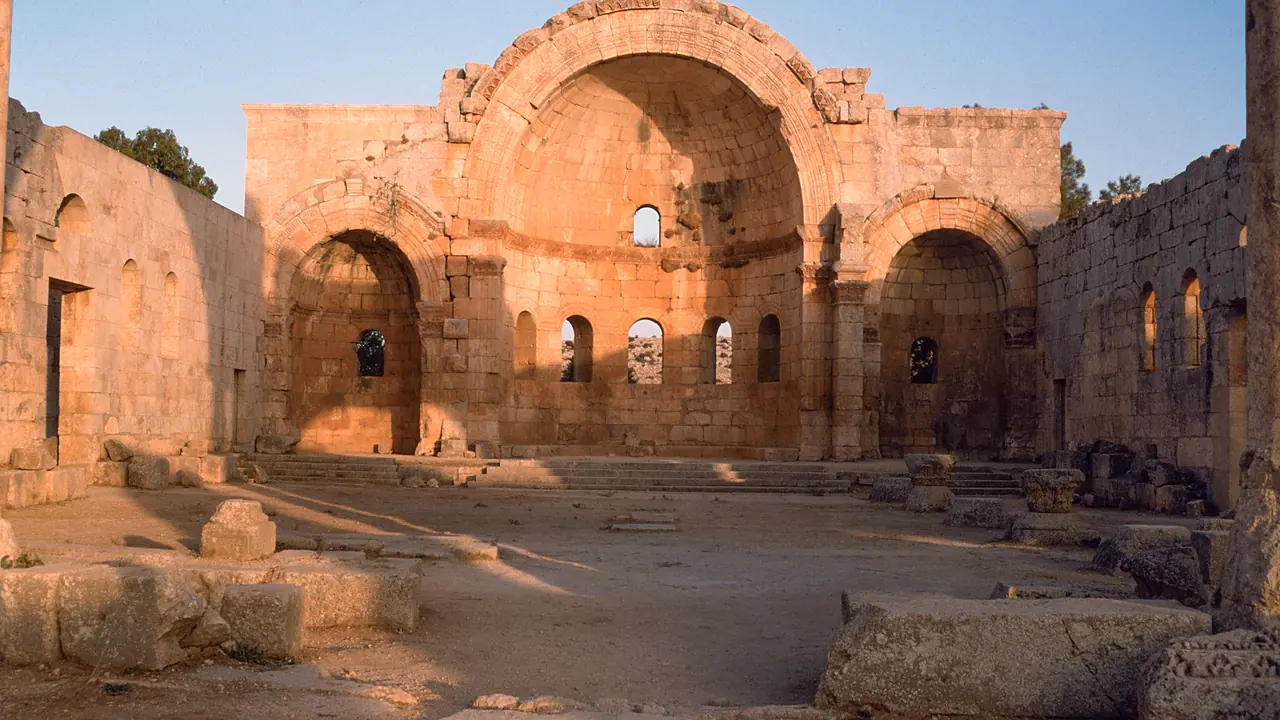
A monumental complex is raised around the column under the emperor Zeno — the largest church in the Christian world, unmatched until Hagia Sophia is finished in 537.
A baptistery, a monastery, hostels
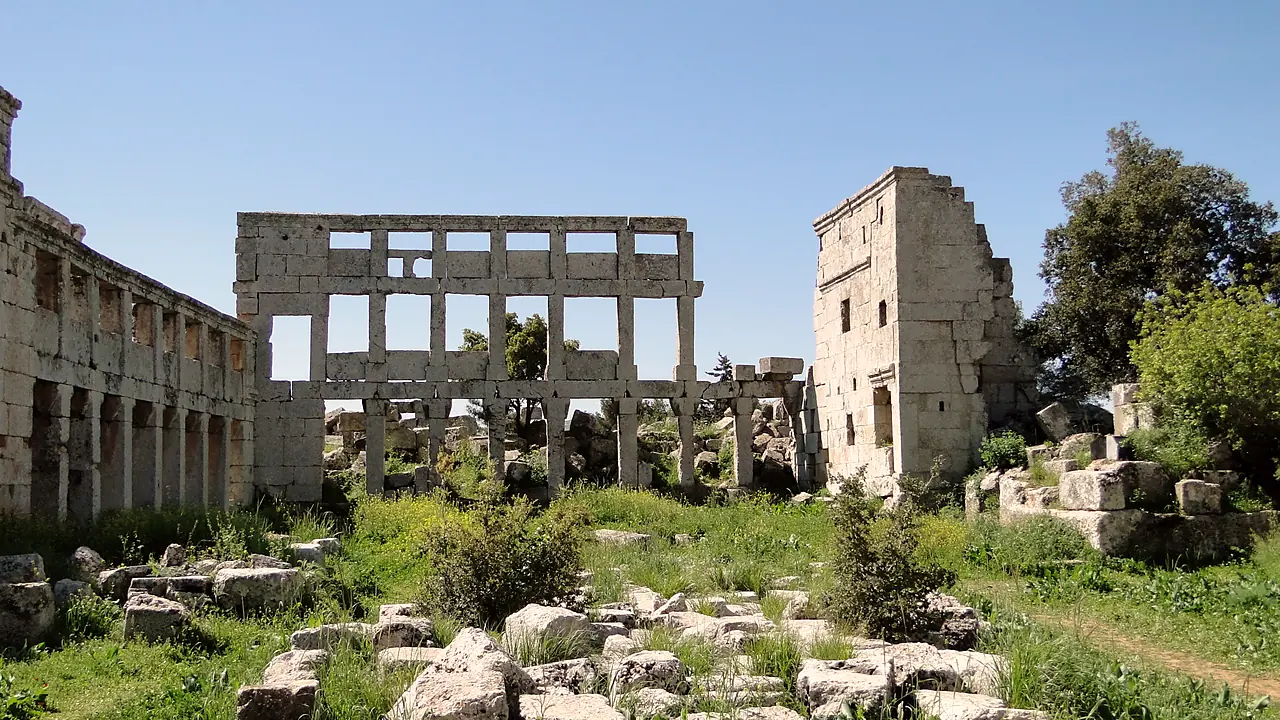
The complex grows into a pilgrimage machine: the processional road, the monumental arch, lodging for arrivals, cells for monks and students.
The ground moves
An earthquake devastates the region — Antioch, Aleppo, Seleucia — and damages the church while further expansion is still under way.
The community changes hands
The monastery passes into Miaphysite control. Under Muslim rule the site remains in Christian hands.
A church becomes a qal'a
Byzantine forces take and fortify the hill. Walls go up around the pilgrimage complex, and the name Qal'at Sim'an — the Citadel of Simeon — dates from here.
The complex is wrecked, then taken
The buildings are destroyed in 985. In 986 the Hamdanid commander takes the fortress after a siege of three days.
Basil II repaves the church
An inscription records the emperor Basil II and his brother Constantine VIII laying a mosaic pavement and carrying out repairs.
The hill changes hands again
The Fatimids take the fortress. Its military value declines from here, and the site is gradually left.
Ancient Villages of Northern Syria
The site is inscribed as part of the UNESCO serial listing covering some forty villages of the limestone massif.
The listing is moved to the Danger list
The Ancient Villages are placed on the List of World Heritage in Danger, with the rest of Syria's World Heritage sites, as the war reaches them.
The pillar is struck
The surviving stump of the column is damaged in an airstrike during the war.
The ground moves again
The February earthquake damages the complex. No assessment of the extent has been published, and none is invented here.
The gates open again
Aleppo Governorate carries out a light restoration of the monument and reopens it to visitors on World Tourism Day, 27 September 2026.
Open, and under protection
The complex stands in the limestone massif under the antiquities authorities — a ruin by design since the tenth century, and now receiving visitors again.