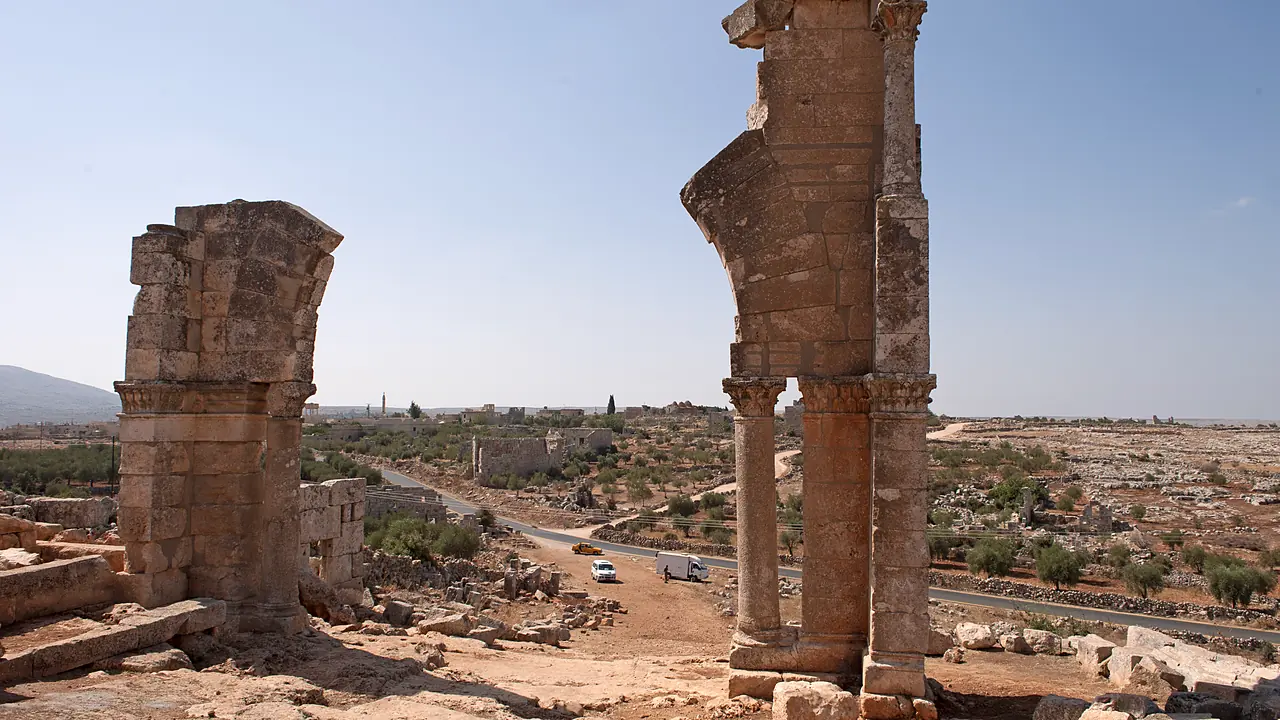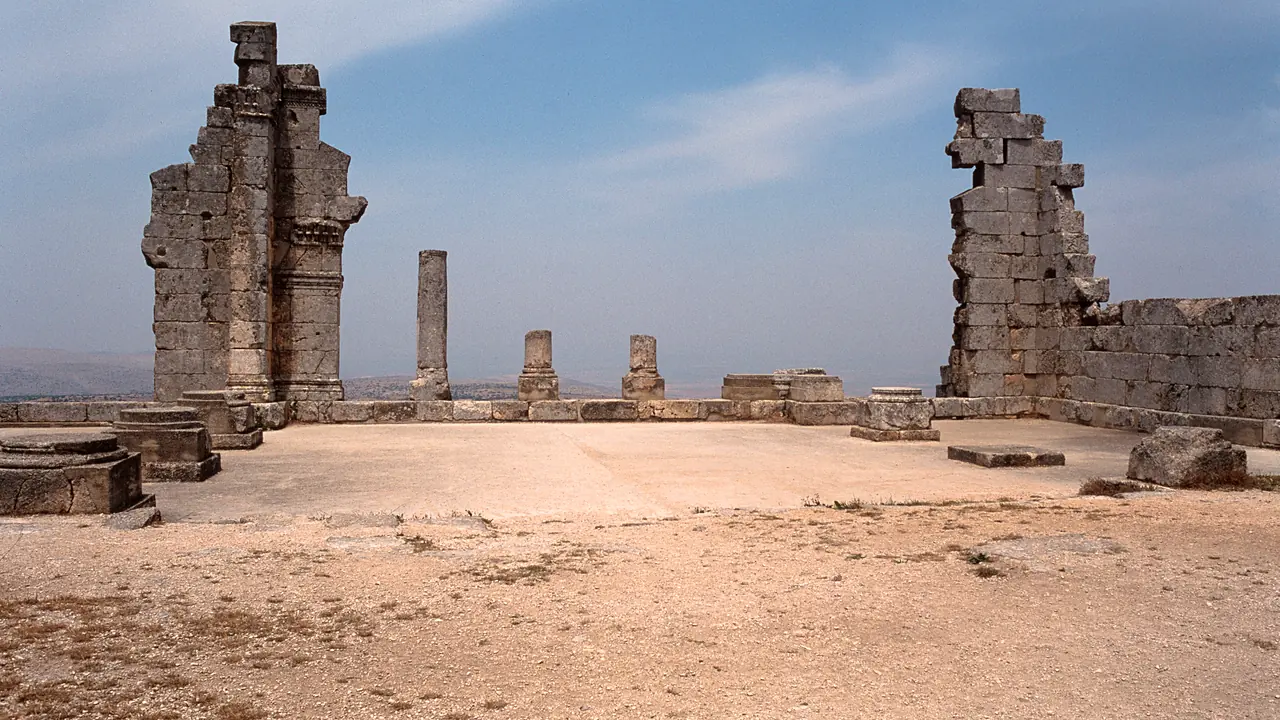
The limestone massif between Aleppo and the Orontes is scattered with villages that were prosperous in late antiquity and then, over centuries, emptied. Houses, churches, olive presses, tombs and cisterns are still standing, in some places nearly to roof height, because nobody came back to quarry the stone for anything else.
They are usually called the Dead Cities. The UNESCO listing calls them the Ancient Villages of Northern Syria, and inscribed some forty of them as a single serial property on 27 June 2011 — grouped into eight archaeological parks. Qalaat Semaan sits in the Jebel Sem'an park. Since 2013 the whole property has been on the List of World Heritage in Danger.
01Why this matters for a visit
It changes the arithmetic of the drive. Qalaat Semaan on its own is a monument; Qalaat Semaan inside the massif is a region, and a day in the region is a different proposition from an out-and-back to one hill.
02The eight parks
The inscribed property is organised as eight archaeological parks across the massif: Jebel Sem'an — which holds Qalaat Semaan itself, along with Deir Semaan and Kafr Nabo — then Jebel Barisha, Jebel al-A'la with the church of Qalb Lozeh, Jebel Zawiye with Ba'uda and Rouweiha, and Jebel Wastani with Kafr Aqareb.
Qalb Lozeh is the one to know about: a fifth-century church whose west front is often read as an ancestor of the Romanesque, and it is in the same massif.
Which of these can be reached from Qalaat Semaan in the same day, and by what road, is to be recorded on the site survey — access is the whole question, and access cannot be researched remotely.